
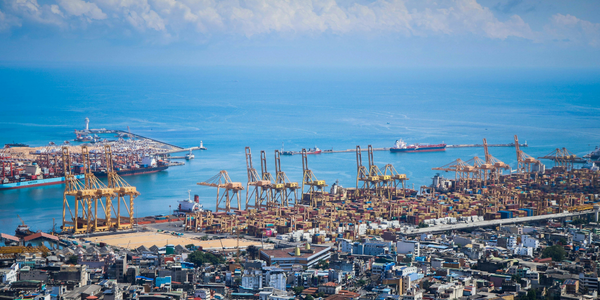
CARGO FRAUD THROUGH MOMBASA: A QUIET THREAT TO EAST AFRICAN TRADE
By OLM Law Advocates LLP — Nairobi, Kenya
The Theft No One Sees Coming
Most companies shipping goods into East Africa do not imagine that cargo can disappear after a vessel docks safely at the Port of Mombasa. Yet cargo fraud in Kenya is now a structured business model. The criminals never touch the vessel. They rely on timing, documentation, and the exporter’s trust. This form of organised cargo diversion is increasingly recognised as a form of maritime fraud affecting East African trade corridors
Containers carrying xylene, resins, lubricants, and other industrial materials arrive exactly where they should. They are discharged, cleared, and returned. The port systems show nothing unusual. Finance departments remain relaxed, until payment reminders receive silence.
By then, the cargo is gone. And “gone” in the world of Mombasa port cargo diversion means unrecoverable.
The Perfectly Ordinary Order
It rarely feels like the start of a crime. It feels like landing a strong new customer or an affiliate of an already existing customer.
An email arrives from someone who appears to work at a well-known manufacturer or distributor, sometimes even a company your business has supplied before, or one whose name carries weight in the region. The request is sensible: chemicals or industrial oils that genuinely move in our markets; quantities that fit the commercial landscape. The purchase orders are professionally laid out. The signature block lists a real role. Your team is pleased.
A longer payment window is requested, sixty to ninety days from the bill of lading, framed as a gesture of future partnership. Sales approves it because it sounds like relationship-building. Logistics issues the BL instructions because nothing on the screen looks out of place.
But that is exactly where the danger lies: in how comfortably everything tracks with expectation.
Behind the email, the fraudsters have prepared well. They have cloned or closely mimicked corporate branding: forged letterheads, modified logos, crisp business cards. They register domains that differ from the real one by a single letter. They borrow the real names of the real employees who are responsible for procurement in those legitimate companies. They do just enough to disarm suspicion while staying far enough away to avoid being caught.
And almost always, the goods are destined, at least on paper, for Uganda via Mombasa, a routing that makes sense commercially but works perfectly for the fraud. The trap has already been set long before anyone realises there was a trap at all.
After the vessel departs, a simple request arrives: “Please amend the consignee details urgently.”
The exporter treats this as normal housekeeping. The carrier adjusts the bill of lading. But that minor change is the moment cargo theft in Kenya becomes inevitable.
When the vessel berths, the person collecting the cargo is not the legitimate company whose name appears on the Purchase Order, but a fraudster’s trusted clearing agent. Containers are cleared and stripped immediately. The goods disappear into a market where they are easy to monetise and almost impossible to trace.
Weeks later, when the exporter finally becomes alarmed, emails bounce and phone numbers ring dead.
There is no villain to chase; just paperwork that briefly played along.
Why Mombasa Is the Perfect Stage for Cargo Diversion
Mombasa feeds inland trade into Uganda, Rwanda, South Sudan, and eastern DR Congo. That creates the perfect geometry for organised fraud.
Two realities matter most:
Speed
Cargo can be cleared in the morning and be in Uganda by nightfall. Once inland, even the police struggle to intervene.
Distance + Documentation Control
Exporters rarely have direct oversight of clearing agents or truckers. They cannot monitor customs progress. They assume the system is watching. It is not — at least not in a way that helps them.
Criminal groups understand both vulnerabilities far better than most foreign exporters.
Not All Cargo Is Equal
This is not a random crime. It focuses on:
- High-value chemicals
- Industrial oils and greases
- Polymers and resins
- Products with stable shelf life
- Goods that keep value once decanted
These can be quietly broken down into smaller units and consumed in regional markets, leaving no trail.
If a product can vanish without an audit, it is attractive to the networks behind cargo fraud in East Africa.
The Insurance Moment
Many exporters assume that insurance will respond automatically. But insurers now demand proof of:
- Due diligence on the buyer
- Red flag analysis
- Immediate mitigation attempts
- Local inquiry before claims submission
Without those, claims drag. Coverage may be disputed. The exporter feels defrauded twice — by the criminals and by the process.
This is why insurers increasingly involve local maritime lawyers in Kenya early: to establish facts while they still exist.
What We Do When There’s Still Time
When OLM Law Advocates LLP is called early enough, we can:
- Recover the consignment and have it reshipped to the port of origin or sold locally
- Establish who cleared the cargo
- Retrieve customs data from the Kenya Revenue Authority
- Trace inland trucking routes where possible
- Identify targets capable of responding commercially
Sometimes we recover assets or payment. Sometimes we salvage insurance outcomes. But we cannot reverse time. Once the chain is cold, cargo recovery in Kenya or Uganda becomes a long shot.
A Better Strategy: Stop the Loss Before It Starts
Prevention in this sphere is not complicated. The strongest exporters apply deliberate friction:
- Second-channel verification for any East African bound consignment
- Escalation rules for post-departure consignee changes
- Local confirmation of routes for goods destined for Uganda
- Early calls to someone who actually understands Kenyan port operations
These steps are inexpensive compared to a USD 300,000 write-off and months of uncertainty.
The exporters who succeed in Africa are the ones who trust carefully.
Why We Care
We have sat across from too many companies who reached out only after the cargo was already gone. The financial loss is damaging, but the frustration of not even knowing where the goods went hurts more.
We would rather be engaged before a container leaves port. We would rather be asked to protect than to explain a failure. The real cost of ignoring risk is time you can never get back.
Before You Ship to Mombasa Again
If you are exporting solvents, oils, greases, chemicals, or polymers, especially into Uganda via Mombasa, you are not operating in theory. You are operating in the most targeted corridor for cargo diversion in East Africa.
The best moment to assess and prevent cargo fraud in Kenya is today, not the day after your ledger reveals a missing USD 350,000.
Speak to someone who sees what happens beyond the bill of lading.
If your company has experienced cargo loss or requires guidance on managing trade risk through East Africa, our team can be contacted here.
OLM Law Advocates LLP has successfully assisted global exporters facing cargo fraud and diversion at Mombasa port. Download our free white paper to learn how criminals operate — and how to protect future shipments.
OLM Law Advocates LLP
Nairobi, Kenya
legal@olmllp.com | www.olmllp.com
Trade into East Africa is worth pursuing. It simply demands the right eyes on the ground.